I built two creative tools so I could work by voice and from my phone
A phone-first ski editor replaced a missing interface. A voice layer made Ableton easier to operate without replacing it. Two personal projects taught the same lesson: build around the decisions the person actually wants to make.
By Lucas Cairns13 minute readAugust 11, 2026Revised August 16, 2026
VideoPhone-directed
A 28-minute film and a 2:56 reel from one ski day.
137 source clips16.5 GB rawFilm + reel
MusicVoice-directed
A sampled flute phrase, played back as an editable instrument.
Sample to stemsMIDI + devices6:13 working version
I like making music and ski films. I do not like the hours of precise laptop work sitting between an idea and a finished thing.
I knew which ski shots belonged, how I wanted the pace to feel, which drum pattern I wanted, when the flute should enter, and what sounded wrong in the mix. Every one of those decisions had to be translated into hundreds of tiny interface moves, and I was the translator.
So I built the interfaces around the way I could actually work: speak the direction, inspect the result, listen or watch, and keep refining. The coding agents and the tools they built handled the mechanics. I remained the editor and producer.
This is a specific example of Briu's build layer, not a claim that every workflow needs custom software. The ski project needed a missing interface replaced. The music project already had a strong professional tool; it needed a thin control layer that could drive it in a way my body and working style could use.
The shared constraint
The interface was the bottleneck.
The useful software was highly specific: one phone decision surface for this archive and one voice-directed control layer for this Ableton set.
01 · Video
I needed to edit where I had the energy.
Normal pathI sit at the computer, scrub 137 clips, set hundreds of cuts, and reopen the full project for a short version.
→
Built pathReview one clip at a time on my phone. Keep, drop, trim, and star. Let the computer render both edits.
02 · Ableton
I needed my ears to move faster than my hands.
Normal pathFind the track, clip, device, send, parameter, and exact bar. Change each value. Play it back. Repeat.
→
Built pathDescribe what I hear and keep my attention on the passage instead of the controls.
Project one · Alpine Lakes Vision Quest
Three months of untouched footage became a film in one weekend.
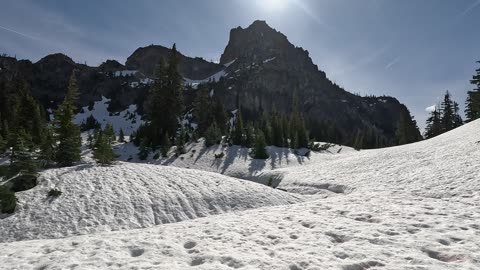
I came home from a twelve-hour day on Mount Daniel with 137 clips and 16.5 GB of raw footage. Preparing phone playback and the final outputs grew the working media set to about 45 GB. I cared enough about the day to carry a GoPro for twenty miles. Then the files sat for three months because my editing workflow required the exact block of laptop time I never wanted to give it.
Across roughly 48 hours, including about a day of engineering, I built a phone-first editor while using it.
The correction
“Take all my chronological videos, make the main edit, then I star reel clips and edit the reel separately. Both have unique edits but use the same clips.”
From the August 3 build session, lightly cleaned for transcription.
→
What the app had to guarantee
One chronological source libraryA star controls reel membershipFilm trims belong only to the filmReel trims belong only to the reel
The first implementation still leaked one edit into the other. This correction became a tested data contract, not just a screen-label change.
Figure 1 · The decision planeLarge media stays home; small decisions move
≈45 GB
Working media
16.5 GB of raw clips plus derived playback and output media remain on the computer.
→
≈15 KB
My edit decisions
Keep, drop, trim, star, and the two independent timelines travel with the phone.
→
Two outputs
Full film28-minute chronological story
Short reel2:56 edit over the starred moments
I still chose every shot and adjusted the cut points in both edits. The app removed the duplicated setup and rendering work that normally makes me give up before creating the second version.
I finished the main edit on my phone while walking my cat. Building the app and editing the whole project was still less painful than sitting at my computer and doing the same work in Resolve.
I wanted to produce with my ears instead of driving every control by hand.
Ableton is harder to explain than the ski editor. A single musical decision can touch the arrangement, a MIDI clip, a track level, two return channels, several devices, and a specific fraction of one bar.
If I hear that a hi-hat is too loud and too dry, the idea takes one sentence.
I moved between Codex and Claude Code while Ableton stayed open in front of me. The agents built and extended the control layer that let them inspect and change the real Live set. When I dictated a bounded change, the active agent inspected the set, made the edit, read the state back, and replayed the passage. I listened on my monitors and accepted, rejected, or refined it.
Figure 2 · A simplified Ableton set diagramIllustration, not a session screenshot
Kick + drums
Hats
Flute
Skank
Bass
Echo throws
EQ Eight
Short Room
Echo 1/8
Utility
Music detail: timing, phrasing and translating a direction
Figure 3 · One musical location, three ways to name it130 BPM · 4/4 time
1 e & a64.1.1 → 64.1.4
2 e & a64.2.1 → 64.2.4
3 e & a64.3.1 → 64.3.4
4 e & a64.4.1 → 64.4.4
462 msone quarter-note beat
231 msone eighth note
115 msone sixteenth note
7.38 secone four-bar phrase
At 130 BPM, musical conversation has a physical footprint. I could say “the & of two in bar 64” while the tool resolved that direction to 64.2.3. The same clock let us measure swing pockets, leave room for one instrument to answer another, and shape a reverb or delay envelope so its tail cleared the next downbeat. The measurements gave the agent something to aim at; I still decided whether the pocket felt right.
The direction
“In this eight-bar pass, bring the hi-hat down a little, make it wetter, and throw the hit after the triple figure, but shorten the tail so it clears the next downbeat.”
Condensed from consecutive directions in the August production sessions; this is not presented as one verbatim prompt.
→
What the agent had to resolve
Resolve the exact eight-bar window in LiveFind the audible hat and triple figure across the sounding lanesMap the next downbeat and the available pocket before itChange the intended event, level, send, or wet lane, not a guessed trackSet the throw length and envelope to clear the next entranceReplay the same passage for my accept, reject, or refine decision
The agent could execute and measure the change. It could not decide whether that pocket felt right for the song.
We worked in four- and eight-bar passes. I described the instrument, pattern, placement, dynamics, signal chain, send, or effect I wanted. Then we reviewed how the idea developed across 16- and 32-bar sections and eventually across the whole song.
When the agent could not reach the operation I was asking for, whether an event-level wet change, a trustworthy map of which lane was actually sounding, or proof that a reverb tail reached the mix, we paused production and built that capability into the control layer. That tool-building was the slow part of the session. Once a control existed, repeating the same class of edit became much faster.
I found a flute phrase in a 1972 dub recording that I loved. I auditioned the separated phrase before we called it a flute, because the model only knew it as part of an “other” stem.
01Choose the source
I found the musical phrase worth building around.
02Split the stems
The system separated drums, bass, vocals, and melodic material.
03Find the phrase
Candidate phrases were grouped by measured pitch and timbre, then auditioned.
04Transcribe to MIDI
The notes and human timing became editable rather than a flat audio loop.
05Build around it
I directed the drums, skank, bass, arrangement, effects, and mix by listening.
The timing mattered. The flute drifts around the grid by tiny amounts that make it feel played. Quantizing it perfectly had already produced unusable takes, so the agent preserved that timing while placing it on an editable instrument. From there I could ask for a four-on-the-floor kick, a hi-hat on the offbeat, a double kick at the end of four bars, more room around one passage, or a three-note ascending answer that resolves to the root.
I am not a formally trained musician and I do not play an instrument. I first downloaded Ableton about a year ago. I learned by listening closely, taking notes on records, asking ChatGPT and Claude to explain production techniques, and applying what I heard inside the set.
This workflow still does not let someone skip learning music. I needed enough theory, arrangement knowledge, and production judgment to hear the problem, describe the part, decide where it should sit, and reject changes that sounded wrong. The advantage was spending my energy on those decisions instead of navigating the software.
The same loop extended through mix and mastering passes: gain staging, track and return processing, EQ and dynamics, limiter settings, loudness checks, and export verification. I still directed and auditioned those choices. The tools made the controls reachable without requiring me to perform every mouse movement.
The public track is a working version. I still hear edits I want to make and I will direct another Ableton pass separately. That is part of the point: removing the mechanical work does not remove the need to know when the music is finished.
Working trackThe linked public version; this dated article does not track later production changes.
Both projects work because I stayed in the feedback loop without having to operate every control.
Lucas
Direction, selection, and final judgment
Which shots belong and where each cut starts and ends
Which moments earn a place in the reel
Which musical phrase is worth sampling
What the groove should feel like and which part carries the song
Whether a mix, edit, or master is actually finished
Coding agents + tools
Inspection, mechanics, and repeatable proof
Prepare phone-playable media and keep edits synchronized
Render and verify the two video outputs
Separate stems, analyze phrases, and produce editable MIDI
Inspect and change Live tracks, notes, devices, routing, sends, and returns
Build a missing control when Live could not yet expose the requested operation
Read state back and replay the exact passage under discussion
What actually broke
Both tools broke while I was using them.
I built both tools in the middle of real projects, so every bug interrupted the film or the track. Here is what happened in front of me and what changed afterward.
Phone editing
What happenedAn older browser tab could overwrite newer edit decisions from my phone.
What changedThe app now keeps one versioned edit on the server and rejects a stale save instead of letting it silently win.
GoPro audio
What happenedThe automatic cleanup I added made natural mountain audio pulse and sound processed.
What changedOriginal audio became the default. Cleanup now runs only when I choose it for a clip.
YouTube upload
What happenedThree automated upload attempts left duplicate and unfinished drafts.
What changedI deleted the dead drafts and completed that browser step myself.
Ableton mix
What happenedI heard one clap as too loud. Six edits later, it was still wrong because the loudest sound was a separate reverb copy, not the dry clap I had named.
What changedWe started inspecting every sounding clap in the bar before choosing which lane to edit.
Each failure left a rule in my tool: one versioned edit state, original audio by default, an explicit manual fallback for publishing, and whole-bar inspection before changing a named lane. Those rules are why the tools fit me. A general editor serves many workflows; this layer could absorb the particulars of mine.
What this proves about workflow-specific builds
The tool can now be as specific as the work.
Off-the-shelf software asks the user to adapt to its interface. These projects show two ways to change that relationship. The ski editor replaced an interface that did not exist for the way I wanted to review one archive. The Ableton layer kept the professional application and drove the exact production moves I wanted to make.
The same choice applies inside a business. If current systems are producing a reasonable return, a thin layer can coordinate them and carry the handoffs. If one missing or inadequate interface is the bottleneck, a focused tool can replace just that weak surface. Briu starts with the people doing the work, learns the exact handoffs and exceptions, and recommends the smallest useful change.
The result might be a phone tool, an approval screen or a connection between existing apps. The person keeps judgment and authority.
I still owe indy's skank another Ableton pass. I can already hear what I want to change. If the control I need is missing, the next part of the session is building it.